-
ESTAMOS BUSCANDO A
-
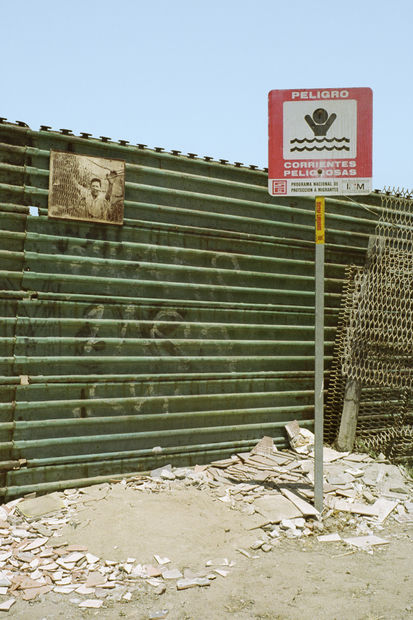
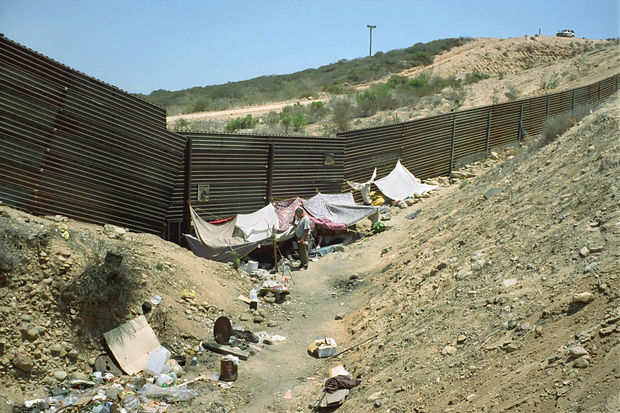
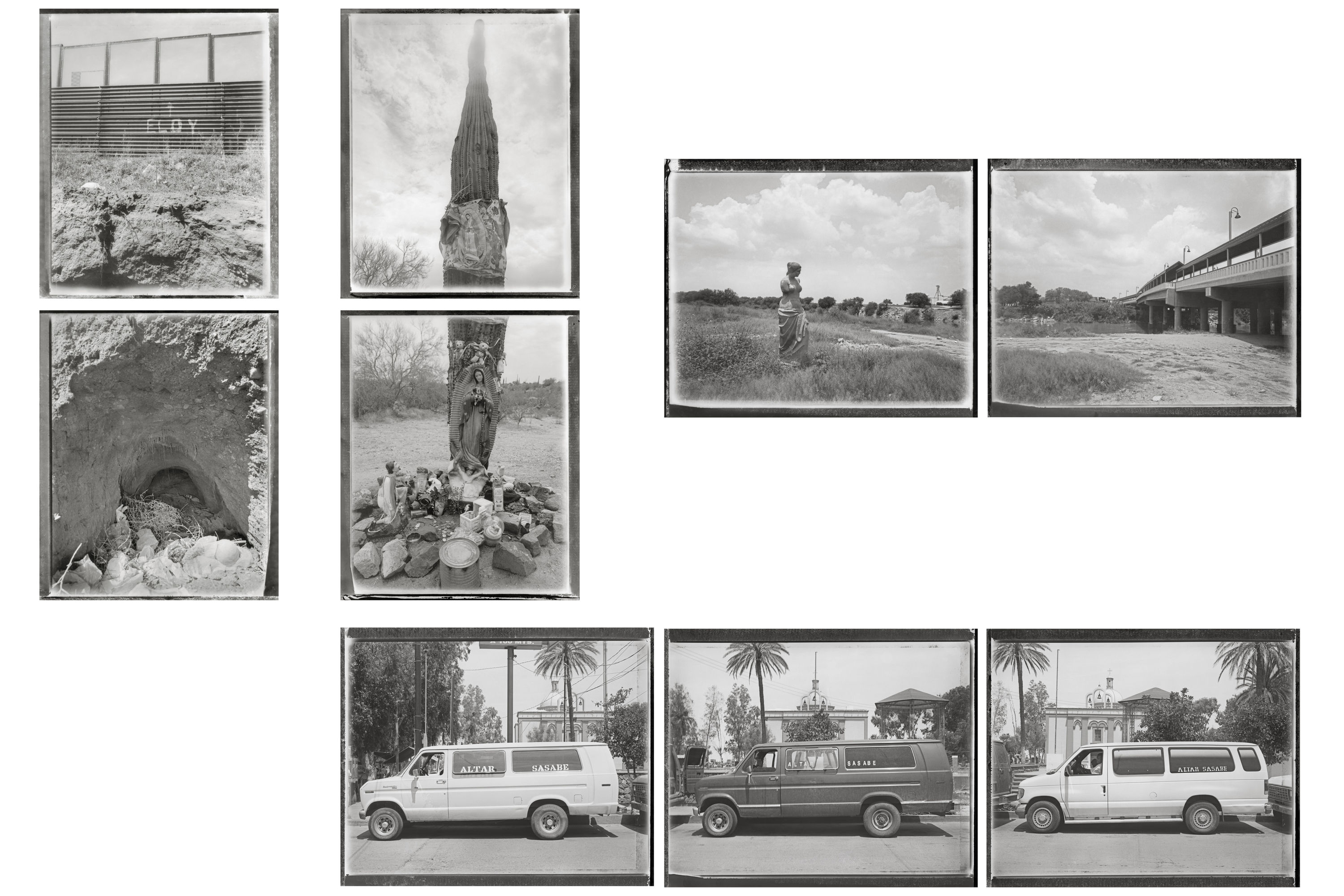
Estamos Buscando A is a multi-faceted series that explores and contemplates the migrant experience in Mexico along the U.S. - Mexico border through various practices, including site-specific public art installation, text and photo-based personal narratives, a gallery-based border wall installation, a migrant guide photo book and select border wall fragment works, spanning a 16-year period from 2002 - 2017.
While our national consciousness has continued a long-standing debate over the issue of immigration, I was drawn to the border light to experience this contested physical place and psychological space, which has served as a beacon of hope for those desiring to go from one place to another, both literally and metaphorically
The quest for a greater understanding of purpose and meaning is universal to our collective existence. We wrestle with the anxiety and uncertainty we all face when we leave behind the known for the unknown. The searing border sunlight forces a pause in this transitory moment. At that very moment, faces intimately reveal an unsettling and knowing sense that something is being lost and sacrificed in anticipation of something gained once nightfall finally arrives. Regardless of the demarcation lines of country and culture, we are all migrants in search of something profound and meaningful to our being.
-
SITE-SPECIFIC INSTALLATIONS
-

-
-
-
-
-
July 20, 2003 - Installation at site Nº4
-
-
-
-
-
PHOTOGRAPHS
-
-
-
-
-
BORDER WALL INSTALLATIONS
-
-
-
TRAGIC LANDSCAPES
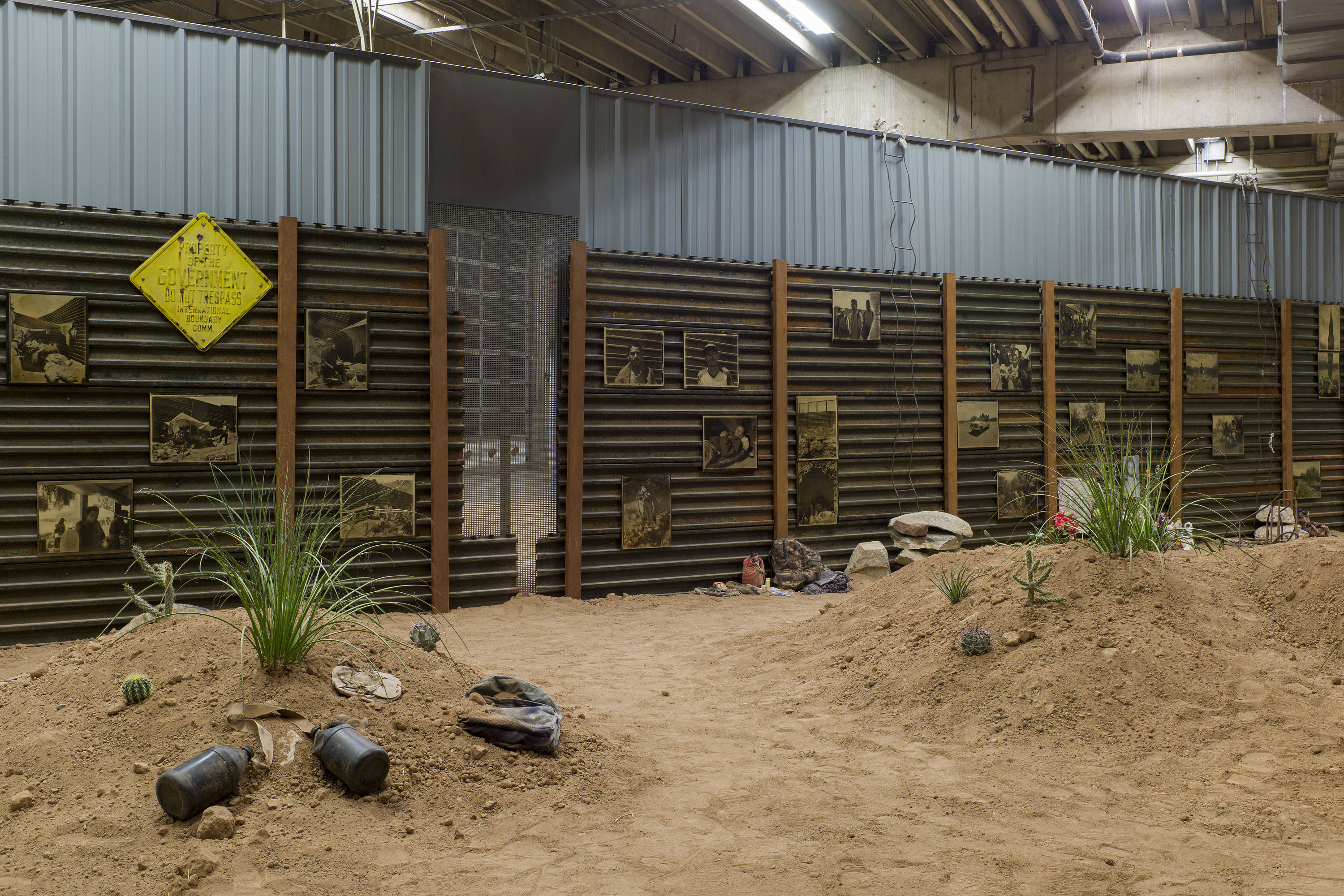
The most dramatic of the exhibitions, Estamos Buscando A (We’re Looking For) by Paul Turounet, an artist celebrated for his haunting photos of migrants, is a giant installation occupying the massive Great Hall. It’s nothing less than a re-creation of our militarized border.
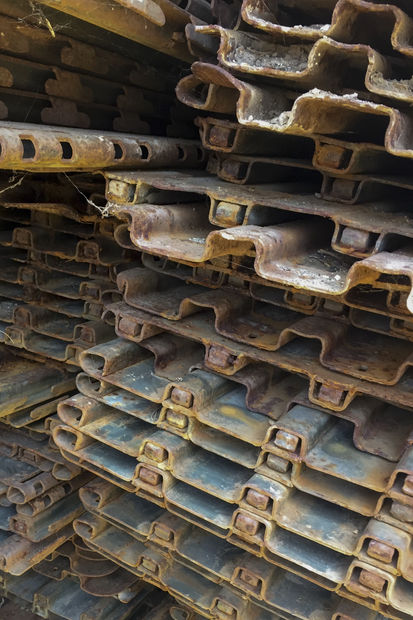
A salvaged slice of actual border wall zooms 64 feet from one end of the gallery to the other, dividing the space into the U.S. on the north, and Mexico on the south. The wall is about 12 feet high, a mere fraction of the height of the president’s proposed new wall, and it’s planted on 3,000 square feet of dirt covering the gallery floor. -
The northern side of the structure is forbidding and authoritarian. Based on Trump’s design protocols, it “foretells the future of isolation and detached nationalism,” Turounet says. The wall is an impassible stretch of pale metal. Nine “Keep Off” signs are painted on a curb; another sign warns of a “high intensity enforcement area.” What seems to be a door in the wall is really a wire cage. There are no humans to be seen.
-
In contrast, the Mexican side teems with signs of life. Desert cacti have been planted in mounds of dirt. Evidence of the travelers is everywhere. Turounet has collected migrant discards and scattered them in the dust: a woman’s gray sandal, camouflage pants, a rotting blanket, a hoodie emblazoned with the words “Union Made.”
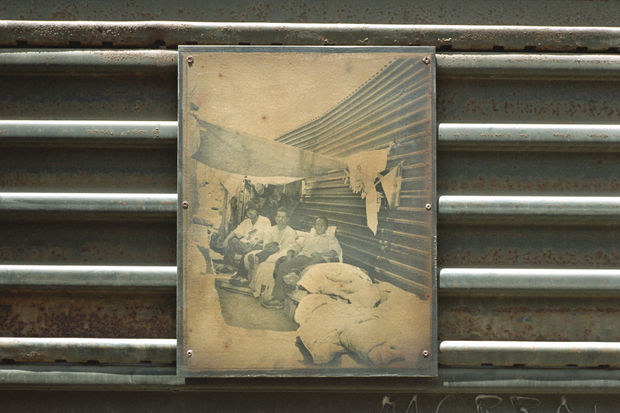
The faces of people who might have left these things behind are fixed to a corrugated metal wall (ironically, another real-life discard, tossed out by the Border Patrol when a new wall went up a decade ago). Turounet has printed the travelers’ weary faces in sepia on shiny aluminum, making them gleam like retablos, the Mexican folk paintings on tin that record miracles. But these gorgeously made pieces don’t show any rescuing saints: instead they grieve for the wretched of the earth. -
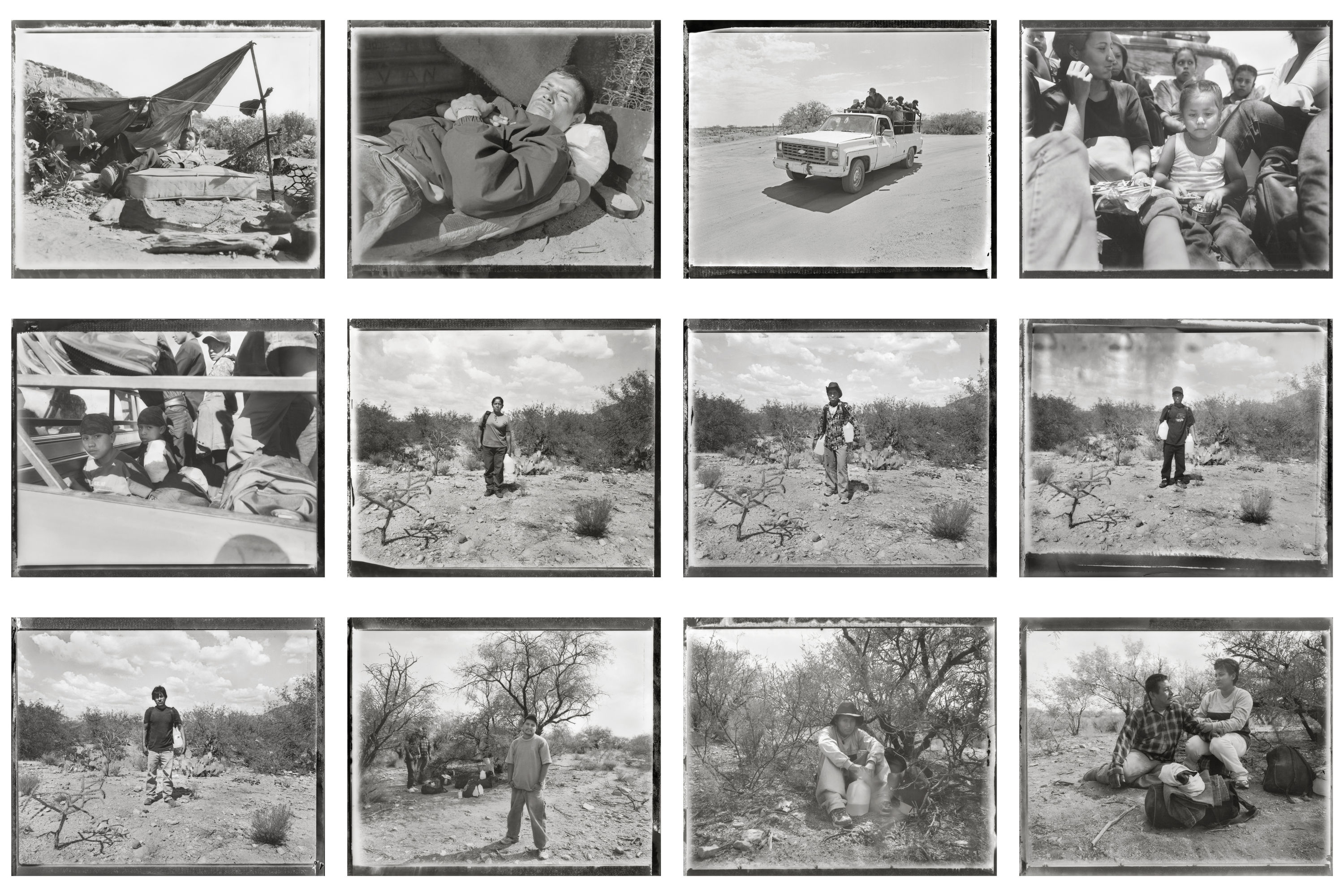
In one heartbreaking photo, a confused small girl rides in a truck crowded with migrants; she looks at the photographer, trying to puzzle out what's going on. Many of the photos portray exhausted men at makeshift camps they've constructed by the wall, complete with bedrolls and grills for cooking. One man lies prone on a pillow, barely able to open his eyes; it's an image that seems to foretell his death. And a flower-laden shrine, so common on the migrant trail, is mourning a life already lost: propped against the wall are family photos of a smiling man, first as a groom with his bride in happier times, and then as a father with his young son.
- Margaret Regan, Tragic Landscapes, Tucson Weekly, 2017 -
-
MIGRANT GUIDE
-
-
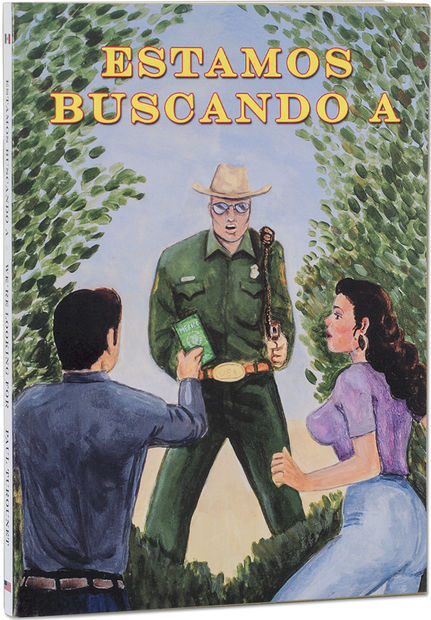
Estamos Buscando A - (We're Looking For) is an account of the human cost of the various impediments - walls, fences and natural features - along the Mexico-United States border. In this sense, it is similar to Misrach's "Border Cantos." But Turounet's little book shows things largely from the Mexican side, mostly in Sonora, which borders Arizona. It features a number of portraits of migrants or would-be migrants and written accounts of what the photographer himself saw over many years of studying their crossings. The book, with text in Spanish and English, is ingeniously put together in the form of a guidebook, the kind of thing an NGO or government might issue to people thinking of walking across. The text warns them not to do it, counseling them, instead, to seek legal means of entry. But, wise to human obstinacy and desperation, it also offers them advice on how to proceed if they must, whom to avoid, how to prevent heat stroke and so on. Alongside Turounet's photographs are a number of illustrations by Tim Schafer. It all makes for an unforgettable act of witness in a compact package.
- Teju Cole, The Best Photo Books of 2016, New York Times, 2016
-
-
-
BORDER WALL FRAGMENTS
-
-
San Diego-based American Paul Turounet is another artist who uses the medium of photography to capture the transience of life at the periphery, and more so than the previously mentioned artists, centers his vision on the stories that unfold before The Wall. Interestingly enough, in works like Estamos Buscando A, he attempts to transcend the limitations of the medium by going beyond the flatness of the photograph and presenting the spectator with an entire mileu to contextualize the images, one that is less observed than inhabited.
– Reuben Torres, 7 Artists to Check Out at El Paso and Juarez’s Joint Border Art Biennial, Remezcla, 2018